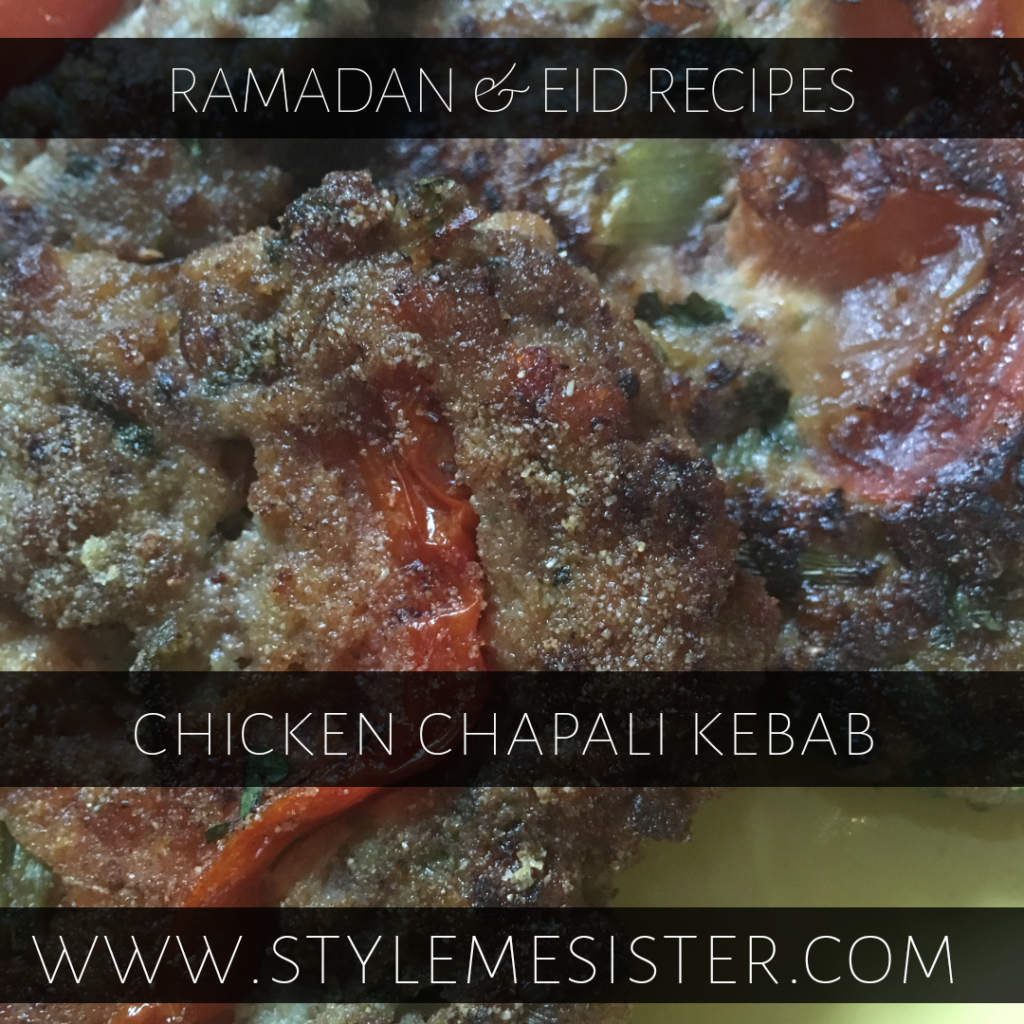
Chicken Chapali Kebab

Chicken Chapali Kebabs

Mutton Chapali Kebabs are associated with the NWFP area of Pakistan. Coming from what can only be described as a bag of pick and mix I do have a little Pathan in me.

Chapali Kebabs are tangy but not spicy. You can find them being sold by the Road side across Pakistan and other Asian countries too…..

What I also have in me thanks to my Pathan blood is impatience.

To make the recipe quicker, and healthier I decided to replace the Mutton mince with Chicken (leaner) and as its Chicken it cooks quicker.

This recipe also works out cheaper (Chicken Mince costs £2.59 per KG at my local Butcher). So it’s healthier, quicker and economical. Bonus.

This recipe is a blend of what I’ve picked up from many family members. My thoughts on family variations of classic recipes is if we didn’t have variation then you haven’t eaten them enough…..

To make enough Kebabs to serve 4 you will need

  • 500 grams chicken mince.
  • 2 TBSP cornmeal
  • 1/2 TBSP salt
  • 1 TSP chili powder
  • 1 TSP coriander powder
  • 1 tsp whole dried pomegranate seeds
  • 1 TBSP pomegranate seed powder (I buy a bag of seeds and grind some down to make the powder).
  • 2 green chilis minced (finely chopped will also do!)
  • 1/2 a tomato chopped finely
  • 2 TBSP coriander leaves and stalks chopped finely
  • 1 medium onion finely chopped

To finish off (optional)
1 tomato thinly sliced
2 TBSP cornmeal

The quick chutney:

  • 3 green chilies
  • salt (to taste)
  • around 16 mint leaves
  • 2 TBSP (heaped) of coriander and leaves and stalks chopped
  • 2 TBSP dried pomegranate seed powder
  • juice of 1 lemon
  • 1 medium tomato

To cook:
Oil to Shallow Fry

1) Mix all the kebab ingredients together.
2) Take a TBSP of the mixture and with wet hands shape them into oblong kebabs.
3) OPTIONAL step: lightly press on the thin tomato slice and sprinkle on some cornmeal.
4) Heat the oil in a large pan on a medium heat.
5) Fry the kebabs until golden brown on both sides (mine took 3 minutes on each side-just remember if the kebabs are thick you need to cook them all the way through). Don’t overcrowd the pan. It will make sloppy greasy kebabs.
6) Drain the kebabs on kitchen paper and serve with Naans and Kebab Chapali Kebab chutney (it’s tangy as its got even more pomegranate in it).

To make the chutney: blitz all the ingredients together. You’ll end up with a ‘rough’ looking chutney but that’s what you are looking for. To make the pomegranate powder you just need to blitz the seeds in your spice grinder or coffee bean grinder.

These Kebabs can be frozen successfully and used with 3 months.
The chutney doesn’t freeze well.
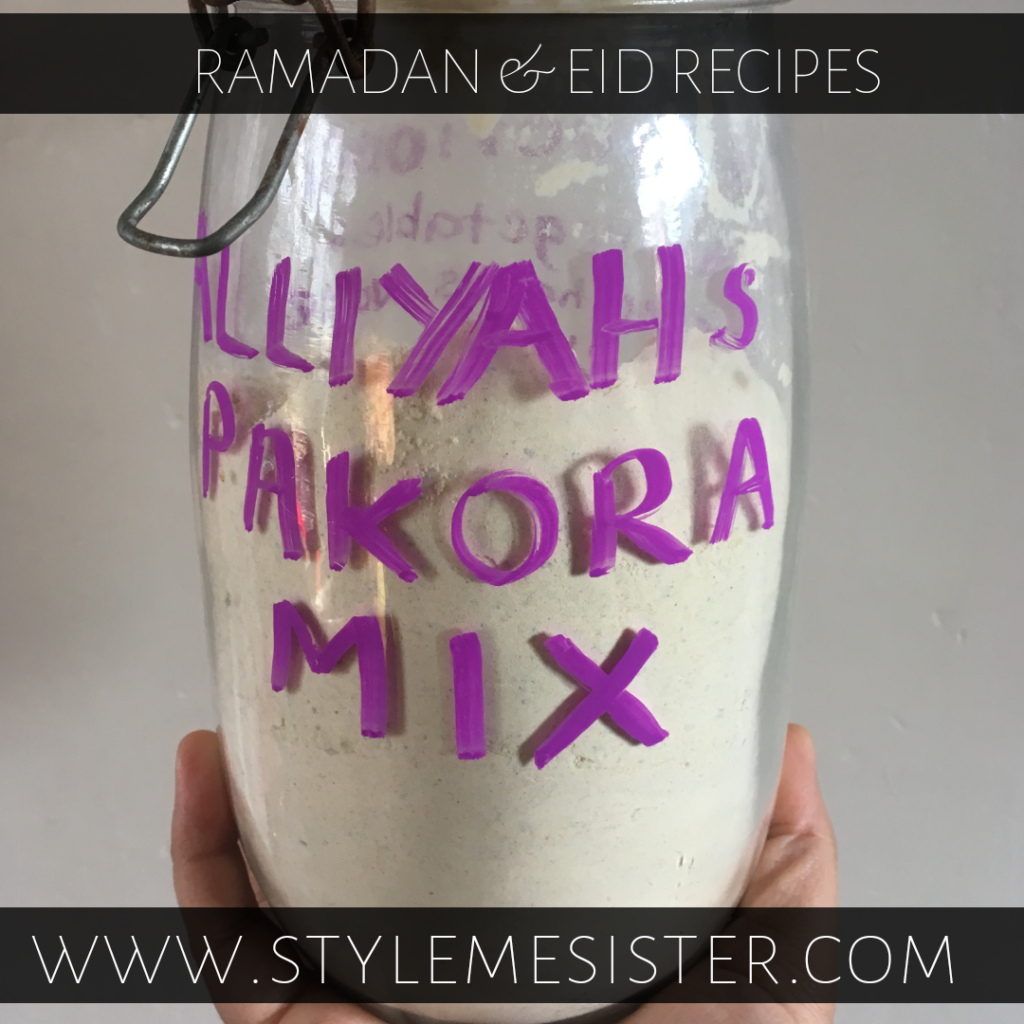
Alliyahs awesome (bulk) Pakora Mix

My bulk Pakora mix

Ramadan Kareem by lovely folk!

For many Asians Pakoras are an essential foodie item on the Ramadan schedule. I’ll admit that as a child I associated these golden nuggets of yumminess with the holy month.

This Ramadan I will be posting recipes I find easy, economical and a bit different to the standard Ramadan feasts we are so used to. And as someone who tries to make healthy eating a part of family life I want to provide recipes I use at home and have tweaked to make them slightly better than the mainstream counterparts. I also like the idea of ‘freestyling’ in the kitchen so I sometimes don’t have exact weights for ingredients just like the average Mama won’t whilst cooking to feed her brood.

I’ll also post shorter articles during the blessed month too. Feel free as always to share the blog posts with your nearest, dearest and folk who love food!

Nowadays I enjoy Pakoras when I want however I know many that spend hours preparing the gram flour mix during the month of Ramadan.

I’m here to suggest that you mix it all in bulk…and cut your work load. Literally!

I make a big batch of Pakora mix to save time and also money. Pre-mixed boxes work out more expensive. The only real convenience they bring to the kitchen is the fact all the spices have been added. That’s it.

Here is my recipe for my Pakora Mix. I’ve made up batches and used them over 2 months so I’ve had no problems at all. I’ve listed the spices I use as standard.

I don’t actually add ‘chili’ in the form of Chili Powder until I’m making a batch of Pakoras. This works for me as I don’t give my daughters lots of chili.

If you are avoiding salt then by all means adjust the recipe to reflect that.

To make a huge batch of Alliyahs Pakora Mix you will need:

4 cups of Gram Flour (that’s chickpea flour aka Basan) sifted into a large bowl
1 TBSP baking powder-sifted into the bowl
2 TBSP salt
1 TBSP dried coriander leaves (heaped)
2 TBSP coriander powder (heaped)
2 TBSP cumin powder (heaped)
2 TBSP carom seeds-whole (heaped)
1 TBSP garam masala powder (heaped)

1) If you haven’t already done it sift the basan (gram flour) and baking powder into a large bowl.
2) Add the spices and stir to eventually distribute the ingredients.
3) Decant the mix into a airtight container.
Your mix is ready to use.

I usually make a test batch of Pakoras so I know if I need to add more spices.

NOTE: to make the Pakora mixture I add 2 TBSP of coriander leaves (finely chopped up) to the mixture.

To use the mix:
There’s two ways I use this mix.

1) Make a thick paste (it should coat the back of a wooden spoon) and dip in your favourite vegetables and deep fry until golden brown.

2) Cut up your vegetables and add 3 tablespoons of the mix. Add a little water and mix to coat the vegetables and create a sticky mix. If the mixture is too gloopy add a bit of water. If you cannot see the Pakora mix and the vegetables are not coated add more mix. It’s a bit of trial and error depending on how much vegetables you are using.

Don’t forget to add some chili powder if you need something a bit more spicy.

Enjoy your Pakoras! What do you usually serve with yours? Drop us a message below.