Leftover Kebab Biryani

Eid-ul-Adha leftovers Biryani

Now before you turn away from this recipe HEAR ME OUT.
For some of us Eid-ul-Adha is very meat heavy due to the nature of it (Qurbani Meat overload). There’s only so many Kebab recipes you can plough through.
Over time I must have tried lots of Kebab recipes with various chutneys. However I’ll be honest; I get fed up of food and so do the girls. In the end is sits around in the fridge drying out.

So last year (or maybe the year before) I decided that I wanted to create a recipe to use up leftover kebabs from the platters I create. A Pulaw in my humble opinion wouldn’t have worked so I considered it’s cousin; Biryani.

The way I would explain the different between a Biryani and Pulaw is this: A Pulaw is a one pot rice dish where you create the base and cook the rice in the stock created. A Biryani is where the rice is steamed between layers of the meat/vegetable base. A lot of Biryanis are tomato sauce based and can be tangy and very fiery.

This is a medium heat tangy Biryani which I serve with a range of Raitas and Chutneys.

The kebabs I’ve used this Biryani include: Tikkas (chicken and meat), Seekh kebabs and even liver kebabs (just shows how versatile this recipe really is).

So to make enough to serve 5/6 you will need:
450-500 grams (Cooked) leftover kebabs
300 grams rice
250 ml passata
150 ml low fat plain yogurt
5 TBSP oil
6 heaped TBSP fried onions pre-soaked and drained
1 TBSP garlic and ginger paste or just garlic paste.
3 TBSP fresh coriander leaves-chopped finely
Cooking salt-to your own requirements
2 heaped TBSP mint leaves-chopped finely
5 dried plums (available in most South-Asian food stores).
2 heaped TBSP ground coriander seeds
2 heaped TBSP ground cumin seeds
2 heaped TBSP chaat masala
Juice of 2 limes
.4 green chilies sliced (lengthways)-I prefer bullet chilies as they keep their shape well.
3 heaped TBSP fried onions (Do not pre-soak)
4 TBSP Screw pine water (Kewra water)
Powdered food dye (available in Asian food stores; I use a little bit of red and orange to compliment the original colours. You can leave out the dye is you wish to).

1) Heat the oil in a large pan on a medium heat.
2) Add the onions and fry for one minute.
3) Add the garlic paste and fry for 30 seconds.
4) Add the salt and spices and fry for 1 minute.
5) Now add the passata and stir well. Add the dried plums.
6) Now add the yogurt and stir well. Cook the mixture for 5 minutes. You’ll notice it gets thicker and you may see a bit of oil separation. Don’t worry that’s normal .
7) Add the kebabs, half the coriander leaves and chilies. Stir well to cover the kebabs.
8) Add the water and bring to the water. Then reduce the heat to simmer.
8) Reduce the heat and allow the mixture to simmer for 5 minutes.
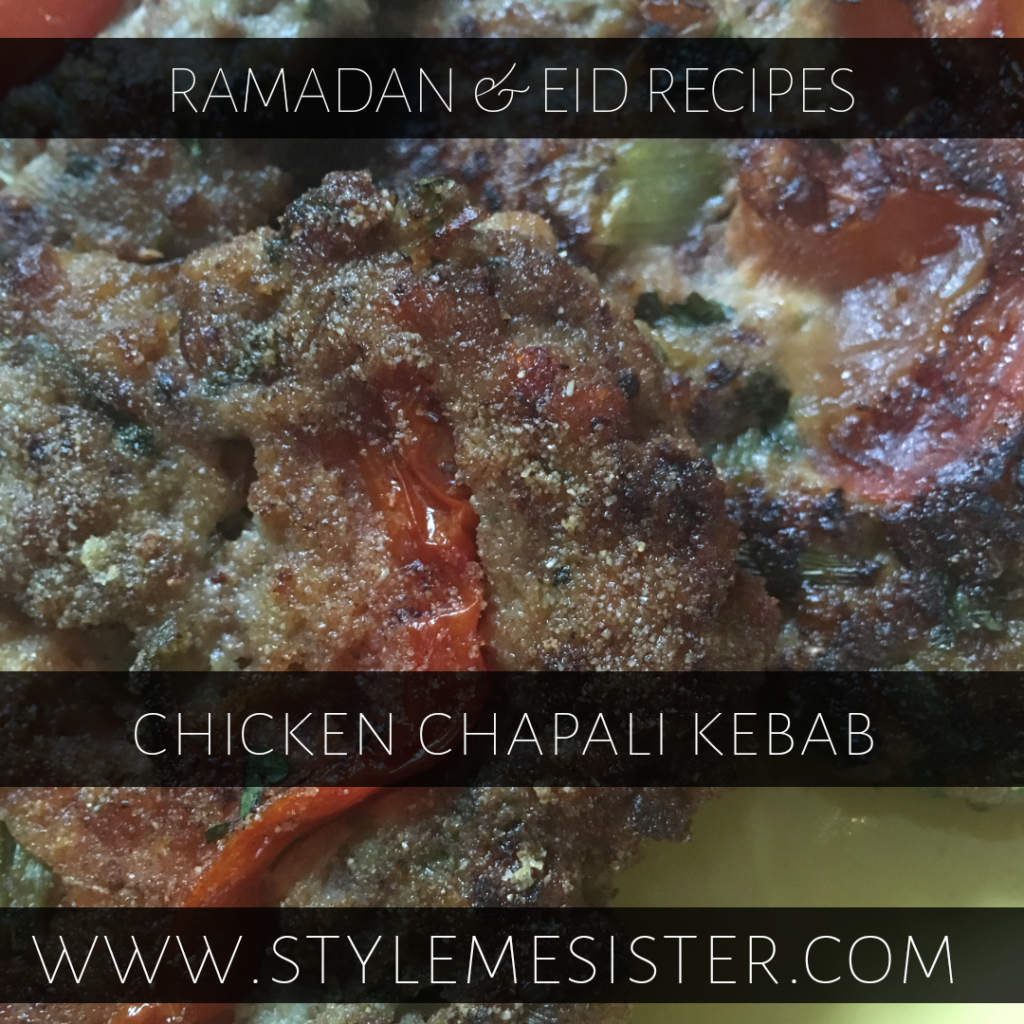

Chicken Chapali Kebab

Chicken Chapali Kebabs

Mutton Chapali Kebabs are associated with the NWFP area of Pakistan. Coming from what can only be described as a bag of pick and mix I do have a little Pathan in me.

Chapali Kebabs are tangy but not spicy. You can find them being sold by the Road side across Pakistan and other Asian countries too…..

What I also have in me thanks to my Pathan blood is impatience.

To make the recipe quicker, and healthier I decided to replace the Mutton mince with Chicken (leaner) and as its Chicken it cooks quicker.

This recipe also works out cheaper (Chicken Mince costs £2.59 per KG at my local Butcher). So it’s healthier, quicker and economical. Bonus.

This recipe is a blend of what I’ve picked up from many family members. My thoughts on family variations of classic recipes is if we didn’t have variation then you haven’t eaten them enough…..

To make enough Kebabs to serve 4 you will need

  • 500 grams chicken mince.
  • 2 TBSP cornmeal
  • 1/2 TBSP salt
  • 1 TSP chili powder
  • 1 TSP coriander powder
  • 1 tsp whole dried pomegranate seeds
  • 1 TBSP pomegranate seed powder (I buy a bag of seeds and grind some down to make the powder).
  • 2 green chilis minced (finely chopped will also do!)
  • 1/2 a tomato chopped finely
  • 2 TBSP coriander leaves and stalks chopped finely
  • 1 medium onion finely chopped

To finish off (optional)
1 tomato thinly sliced
2 TBSP cornmeal

The quick chutney:

  • 3 green chilies
  • salt (to taste)
  • around 16 mint leaves
  • 2 TBSP (heaped) of coriander and leaves and stalks chopped
  • 2 TBSP dried pomegranate seed powder
  • juice of 1 lemon
  • 1 medium tomato

To cook:
Oil to Shallow Fry

1) Mix all the kebab ingredients together.
2) Take a TBSP of the mixture and with wet hands shape them into oblong kebabs.
3) OPTIONAL step: lightly press on the thin tomato slice and sprinkle on some cornmeal.
4) Heat the oil in a large pan on a medium heat.
5) Fry the kebabs until golden brown on both sides (mine took 3 minutes on each side-just remember if the kebabs are thick you need to cook them all the way through). Don’t overcrowd the pan. It will make sloppy greasy kebabs.
6) Drain the kebabs on kitchen paper and serve with Naans and Kebab Chapali Kebab chutney (it’s tangy as its got even more pomegranate in it).

To make the chutney: blitz all the ingredients together. You’ll end up with a ‘rough’ looking chutney but that’s what you are looking for. To make the pomegranate powder you just need to blitz the seeds in your spice grinder or coffee bean grinder.

These Kebabs can be frozen successfully and used with 3 months.
The chutney doesn’t freeze well.

My mixed Pakoras

My Awesome Pakoras!

Who doesn’t love some Pakoras with a cup of Tea (actually Chai) right?

Here are my favourite Pakoras using my Awesome Pakora mix (check out yesterdays post for the recipe). Note that I have added a few tweaks that I think enhance the recipe.

This post is more of a ‘tutorial’ or suggestion piece (just in case you are looking for exact ingredients).

I love my Pakoras with my quick and easy Masala Chai.

For some extra flavour you can sprinkle Chaat Masala over the cooked Pakoras.

Don’t forget the Chutneys and dipping sauces.

To make the mixed Pakoras here’s what you will need:

Cauliflower Pakoras
I used 250 grams of frozen cauliflower boiled until cooked but not OVER cooked.

I then used my Pakora Mix and add 1 TSP of ground ginger, and 1 tsp of dried fenugreek leaves to the mix.

Make the Pakora dipping mix and dip in the cauliflower and deep fry until golden brown.

Aubergine Pakoras

You’ll need one firm Aubergine sliced thinly.

Make up the Pakora dipping mix, dip and deep fry until golden brown.

Egg Pakoras

Now don’t write off the idea of the humble egg when it comes to Pakoras.

Hard boil a couple of eggs, cool and peel. Cut in half and dip into the Pakora dipping mix. Deep fry gently and drain well.

Pre-boiled Potato Pakoras

One of my childhood favourites is the humble yet gracious Alu Pakora.

To make these babies boil 2 whole medium potatoes with their skin on. Once boiled and cooled completely peel off the skin and cut the potatoes into rounds (about the thickness of a pound).

Make the Pakora dipping mix and add 1 TSP coriander leaves finely chopped, dip in the potatoes and deep fry until golden brown.

Sprinkle with some chaat masala. Enjoy.

How do you take your Pakoras? Drop your comments and feedback below.

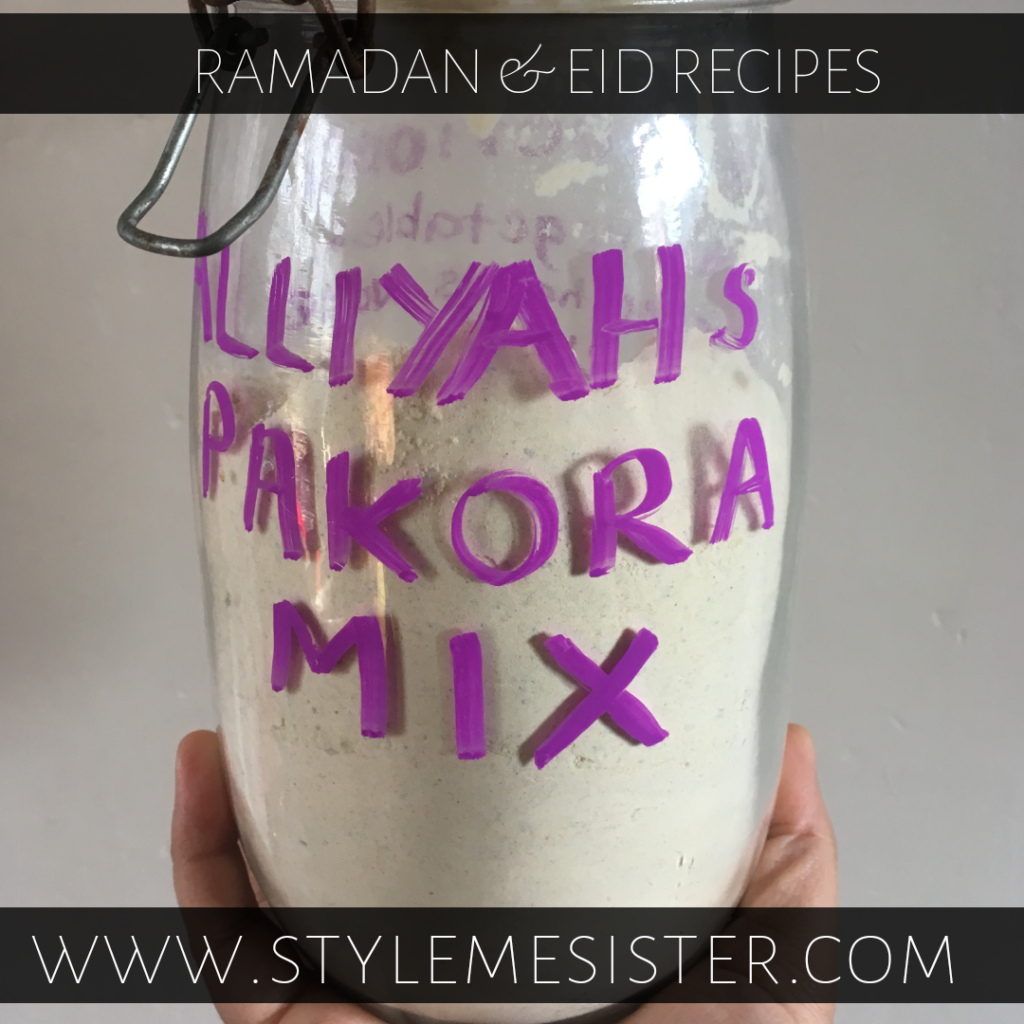
Alliyahs awesome (bulk) Pakora Mix

My bulk Pakora mix

Ramadan Kareem by lovely folk!

For many Asians Pakoras are an essential foodie item on the Ramadan schedule. I’ll admit that as a child I associated these golden nuggets of yumminess with the holy month.

This Ramadan I will be posting recipes I find easy, economical and a bit different to the standard Ramadan feasts we are so used to. And as someone who tries to make healthy eating a part of family life I want to provide recipes I use at home and have tweaked to make them slightly better than the mainstream counterparts. I also like the idea of ‘freestyling’ in the kitchen so I sometimes don’t have exact weights for ingredients just like the average Mama won’t whilst cooking to feed her brood.

I’ll also post shorter articles during the blessed month too. Feel free as always to share the blog posts with your nearest, dearest and folk who love food!

Nowadays I enjoy Pakoras when I want however I know many that spend hours preparing the gram flour mix during the month of Ramadan.

I’m here to suggest that you mix it all in bulk…and cut your work load. Literally!

I make a big batch of Pakora mix to save time and also money. Pre-mixed boxes work out more expensive. The only real convenience they bring to the kitchen is the fact all the spices have been added. That’s it.

Here is my recipe for my Pakora Mix. I’ve made up batches and used them over 2 months so I’ve had no problems at all. I’ve listed the spices I use as standard.

I don’t actually add ‘chili’ in the form of Chili Powder until I’m making a batch of Pakoras. This works for me as I don’t give my daughters lots of chili.

If you are avoiding salt then by all means adjust the recipe to reflect that.

To make a huge batch of Alliyahs Pakora Mix you will need:

4 cups of Gram Flour (that’s chickpea flour aka Basan) sifted into a large bowl
1 TBSP baking powder-sifted into the bowl
2 TBSP salt
1 TBSP dried coriander leaves (heaped)
2 TBSP coriander powder (heaped)
2 TBSP cumin powder (heaped)
2 TBSP carom seeds-whole (heaped)
1 TBSP garam masala powder (heaped)

1) If you haven’t already done it sift the basan (gram flour) and baking powder into a large bowl.
2) Add the spices and stir to eventually distribute the ingredients.
3) Decant the mix into a airtight container.
Your mix is ready to use.

I usually make a test batch of Pakoras so I know if I need to add more spices.

NOTE: to make the Pakora mixture I add 2 TBSP of coriander leaves (finely chopped up) to the mixture.

To use the mix:
There’s two ways I use this mix.

1) Make a thick paste (it should coat the back of a wooden spoon) and dip in your favourite vegetables and deep fry until golden brown.

2) Cut up your vegetables and add 3 tablespoons of the mix. Add a little water and mix to coat the vegetables and create a sticky mix. If the mixture is too gloopy add a bit of water. If you cannot see the Pakora mix and the vegetables are not coated add more mix. It’s a bit of trial and error depending on how much vegetables you are using.

Don’t forget to add some chili powder if you need something a bit more spicy.

Enjoy your Pakoras! What do you usually serve with yours? Drop us a message below.

Coriander and Lemon Potato Curry


I’ll be frank with you. I love curries but I get bored of the same old same old situation.
When the (former) Boss and I decided to have Lunch at mine I created what I would consider a Vegetarian Banquet. I absolutely love vegetarian curries. I believe they showcase how awesome and easy vegetables are to work with. Plus with my healthy food kick I am always looking at healthier meals. It helps that I love daals/pulses!

One of the curries I created was this one. Its a simple, frugal curry I believe is perfect for Spring and Summer as it’s lighter than other curries. There’s no tomatoes in this curry and that’s why it wouldn’t look like a standard red curry.

I serve this curry with plain boiled rice. It also tastes equally awesome the next day. It cooks in less than 30 minutes and children love it too.

This recipe is actually VEGAN. So to my vegan readers I hope this is music to their ears.

To serve 4-6 people (depending on curry portion sizes)

400 grams (baby potatoes work, as do standard potatoes cut into rounds that are pound thickness).
2 RBSP rapeseed oil
1 large onion sliced thinly
5 cloves of garlic-crushed
4 TBSP fresh coriander (including stalks) chopped finely
2 lemons-juiced
1 TBSP coriander seed powder crushed
1 TBSP cumin powder
Salt-to taste
OPTIONAL: 1 TSP chili powder or 1 TSP chili flakes.
1500-2000 ml water (plain stuff from the tap)

To serve:
Lemon wedges (optional)
Yogurt (vegan to keep the recipe vegan)-optional
Plain boiled rice ( I use Basmati).

I assume you guys have prepared the ingredients as above…lets get cracking.

1) Heat the oil in a large pot on a medium heat. Add the sliced onion and fry until onions are soft NOT browned.
2) Add the potatoes and stir well. ‘Fry’ for 5 minutes stirring to ensure the potatoes don’t stick.
3) Now add the garlic and fry for one minute. You’ll be ‘hit’ with a shot of garlic scent. That tells us we are ready for the next step.
4) Now add the salt and dried spices. Stir well to coat the potatoes. If the spices start to ‘burn’ or the mixture starts to stick add 2 TBSP of water to the potatoes.
5) Add HALF the coriander. Stir well.
6) Now add 1500 ml (1.5 litres) to the potatoes. Bring to the boil and then reduce the heat and cover the pan. You need to cook the potatoes until tender. Now this will vary depending on which potatoes you are using. So after 8 minutes ‘test’ the spuds. I usually do this by carefully inserting a sharp knife tip into the potato. If it starts to fall apart its done. It its hard as nails you need to cook it more. I found my standard potatoes took 18 minutes too cook. Now you will be thinking why do you have water left over? Answer: if you want a more ‘runny’ curry you need to add all the liquid. If you prefer a drier curry stick to 1500 ml. Always remember that if water evaporates too quickly the potatoes won’t cook and you need to add more. It’s that simple.
7) Once the potatoes are cooked turn off the heat. Now add the remaining coriander and lemon juice. Stir through.
8) Serve!

I served with rice but you can serve the curry with Naans or maybe Parathas.

Store leftovers in the fridge and warm through thoroughly before serving.

Delicious.