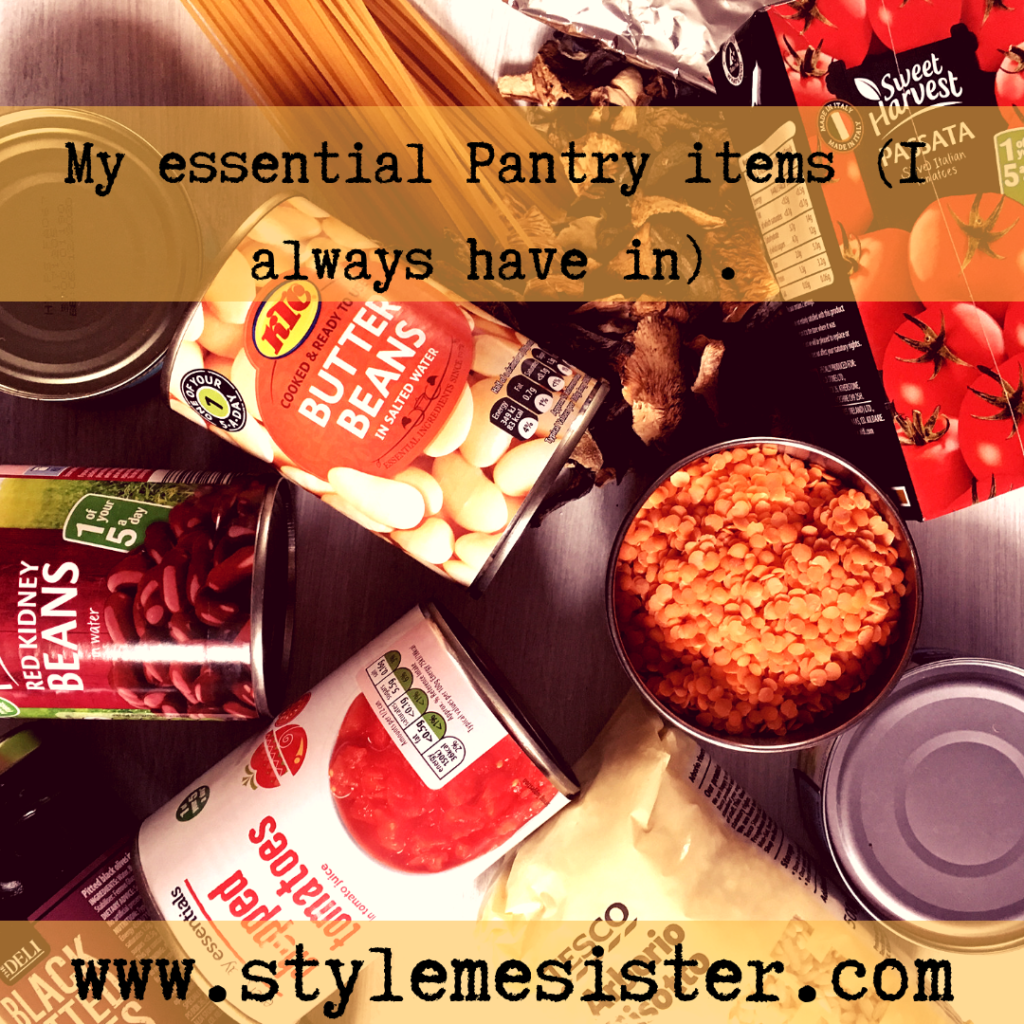
I hardcore meal plan; however even I will admit there are times when planning can and will go wrong (e.g. you forget to pick up Naans for the curry and have no rice in your pantry). So I have a good stocked Pantry…actually it’s a wall cabinet. My kitchen doesn’t have a Pantry…but for the sake of the average reader we’ll stick to my imaginary Pantry.
1) Dried Mashed potatoes
This is most probably my most favourite item. Cheap and effective when you compare the price of potatoes, time taken to prepare them and the power it takes to cook them.
How I use them: in alu tikkis (which I serve as tikki burgers too), shepard’s pie topping, as mashed potato, potato cakes, potato pie…there’s so many ways to use them.
2) Tinned lentils and pulses (in particular red kidney beans, chickpeas, white kidney beans, black eye peas amongst others).
How I use them: I add them to stews, curries, cous cous, salads, mash them up as an alternative to potato mash, make tikkis (kebabs), add to chilis…and so on. You can make some great quesadillas from Pantry items too!
3) Chopped tomato tins
These guys are the king in the kitchen. The base of curries, soups, pasta sauces and bakes….these guys rule really. You can get tinned tomatoes with garlic and herbs added too which are great for pasta sauces.
How I use them: pretty much in what’s listed above! A staple in many recipes. I’ve also been known for adding a bag of pre cooked meatballs, herbs and a tin of tomatoes to the slow cooker to make a quick pasta sauce that I don’t have to stand over the stovetop to cook them.
4) Dried wild mushrooms
In all honesty I know you guys are looking at the screen thinking I’ve gone posh. Hear me out. These guys are a bit more posh than standard mushrooms but sometimes you need to treat yourself to something a bit more exotic.
I add these to risotto rice and make a simple baked risotto. I also add them to pasta sauces too. I love these guys. You can fry some off with garlic and top bruchetta for a supper.
How I use them: soak them first as per packet instructions and then use them as required. Great in risottos.
5) Various rices e.g. paella, risotto, basmati.
The list is endless to why we need carbs in the Pantry but most dishes call for them (especially one pot type or family meals).
How I use them: I use basmati in pulao rice dishes, paella rice in paellas and risotto rice in oven baked risottos (which require no stirring-yay). Also great for serving with curries or stir fries. There are other varieties too e.g. Jasmine, sushi, pudding.
6) Various Pastas
I keep a range of pastas around from spagetti to macaroni.
How I use them: in bakes, with sauces, in soups…. I’d say pastas are the top UK carb (or in the top three). Cheap and filling too so work out for budgets too.
7) Cous Cous and other ‘grains’
I love moroccan food and if you offer me a holiday to Marrakesh right now I’m likely to beat you to the airport. Cous Cous go great with Tagines and also with seekhs, kebabs (as a nice side dish) and also make a great salad too.
How I use them: with Tagines, as an alternative side to rice and in salads.
8) Dried herbs/spice blends/rubs/waters
I have loads of these and in all honesty could write a huge article on them. To save you time I will say look at what type of foods you enjoy and stock up in accordance to that. So if you love making curries go for chili powder, tumeric, cumin powder and coriander powder. You can also purchase whole ‘garam masala’ and grind some as when needed (the ready grinded stuff is horrible).
Rubs: you can make your own signature blend again depending on your own preferences.
Herbs: if you love pasta and pizza mix a batch of Italian inspired herbs to keep on hand to add a bit of snazzy to your meal.
There’s also more ‘posh’ things you can add to the Pantry such as dried rose petals, saffron and rose water.
9) Pizza Base mix packets
All you have to do is add liquid, knead and voila homemade pizza!
How I use them: with passata, herbs and cheese for a simple pizza for making homemade calzones.
10) Plain and Self Raising Flours
If you want to introduce the children to cookery baking is a great way…and should keep their attention too!
How I use them: in cakes, blondies, pie crusts, homemade naans… the list is endless.
There’s a host of flours you can try on the market. You can get strong flour to make your own bread. Rye flour for an alternative flavour…get experiment if you want to get the children involved too.
11) Sugars
If you enjoy baking there’s a huge possibility that you need sugars. I have castor sugar, granulated sugar, soft light brown sugar, soft dark brown sugar and sugar crystal sticks.
How I use them: I use castor sugar is most cakes. Blondies call for brown sugar. I use dark brown sugar in caramels. Granulated sugar is used to make sugar syrups. Sugar sticks are used in things like mint tea (or as a photo prop if you are a food photographer).
Tip: you can make your own flavoured sugars really easily. Just add the flavouring to a jar (e.g. a tablespoon of rose petals and a level tsp of fennel seeds to 500 grams of castor sugar to make rose and fennel flavoured sugar for cookie making.
12) Cocoa Powder
Cocoa is a bakers best friend. And also makes great hot chocolates too.
How I use it: in brownies and fresh made from scratch hot chocolates.
13) Various chocolate bars
I have a range of bars in stock at home. From the cheaper 100 gram plain bars to mars bars and so on. And no I don’t spend all day gauging on chocolate.
How I use them: I add them to cookies, ice cream, chop them up and add them to ice-cream sundae bars, melt them down with double cream and make naughty sauces…..
14) Old Fashioned oats
One of the best grains out there.
How I use them: in overnight oats, traditional porridge and in my favourite chocolate chip and oat cookies! Can also be added to smoothie bowls to make the smoothie more filling. You can also make granola with them.
15) Long life milk
As a parent my fear is running out of the white stuff….
How I use them: as a standby for if I forget to go the stores. When the date is nearly running out I can make porridge, rice pudding etc etc. Milk is never wasted in my house.
16) Vac packed Naans and Tortilla wraps
Sometimes you simply forget things and that’s fine. These guys are heroes (especially the wraps when you are preparing packed lunches for children).
How I use them: Pantry quesadillas, burritos, torilla ‘lasanga’ and the naans with a curry or kebabs.
17) Dried (dehydrated) garlic and onions. And fried onions too.
Fried onions are my favourite for making a quick pulao or curry (no cutting or frying off onions what’s not to love right). I use dried garlic and onions in ‘tarka daal’ which is my favourite comfort food ever.
How I use them: in tarkas, garlic in pasta sauces, fried onions in curry and pulao bases. No onion cutting=no tears or headaches.
18) Dried lentils
In all honesty I cannot see a Pantry with no lentils in it. Is this because I’m Asian? Possibly.
How I use them: mainly in daal (lentil curry) dishes. Masoori (split red lentil) is ready in less than 20 minutes. What’s not to love about a protein packed curry like that?
19) Jarred olives (green and black, stuffed too)
Olives add a great punch of flavour to dishes as well as being something the girls can graze on (always rinse them off first).
How I use them: in pasta sauces, smashed up on brushetta and as part of my girls snack boxes.
20) tinned/jarred fish
I love anchovies! I cannot get enough of this salty delight. I also love tuna….
How I use them: I use anchovies in my quick pasta sauce dish. I use tuna in salads, in sandwiches and in quick tuna fish cakes (using dried mash potatoes).
And that concludes my top 20. What’s on your list? Drop your comments below or why not share your essentials on our Social Media.
